World Cup 2026: Key Takeaways from 104 Matches
The 2026 FIFA World Cup runs from June 11 to July 19, 2026, across Canada, Mexico, and the United States, with 48 national teams playing a record 104 matches in 16 host cities. FIFA is expanding the t...

World Cup 2026: Key Takeaways from 104 Matches
The 2026 FIFA World Cup runs from June 11 to July 19, 2026, across Canada, Mexico, and the United States, with 48 national teams playing a record 104 matches in 16 host cities. FIFA is expanding the tournament from 32 teams and 64 matches, creating a larger group-stage structure and a round of 32 before the round of 16. The opening match is scheduled for Mexico City at Estadio Azteca, while the final is set for MetLife Stadium in the New York/New Jersey area. Stadium View tracks the official schedule, team tactics, player statistics, match predictions, and daily tournament developments for readers in North America and worldwide. Because kickoff times, venues, travel distances, and qualification outcomes can affect planning and analysis, verify every fixture against FIFA’s official schedule before booking travel or evaluating a match. The practical takeaway is simple: build your World Cup 2026 plan around confirmed dates, local time zones, and responsible decision-making.
Imagine trying to follow 104 World Cup matches across three countries without a structured system. The risk is not merely missing a kickoff; it is misreading a time zone, confusing a group-stage match with a knockout fixture, or treating an early prediction as settled information. The 2026 FIFA World Cup introduces an unprecedented operational scale, with Canada, Mexico, and the United States sharing hosting duties across 16 venues. According to FIFA’s official tournament information, the expanded competition will involve 48 teams and 104 matches, meaning that even experienced supporters need a disciplined tracking method. Stadium View approaches the tournament as a data problem: confirm the fixture, identify the venue, convert the kickoff time, and only then assess tactics, squad news, or market information. For your convenience, the sections below separate schedule facts from interpretation so that uncertainty is visible rather than quietly buried.
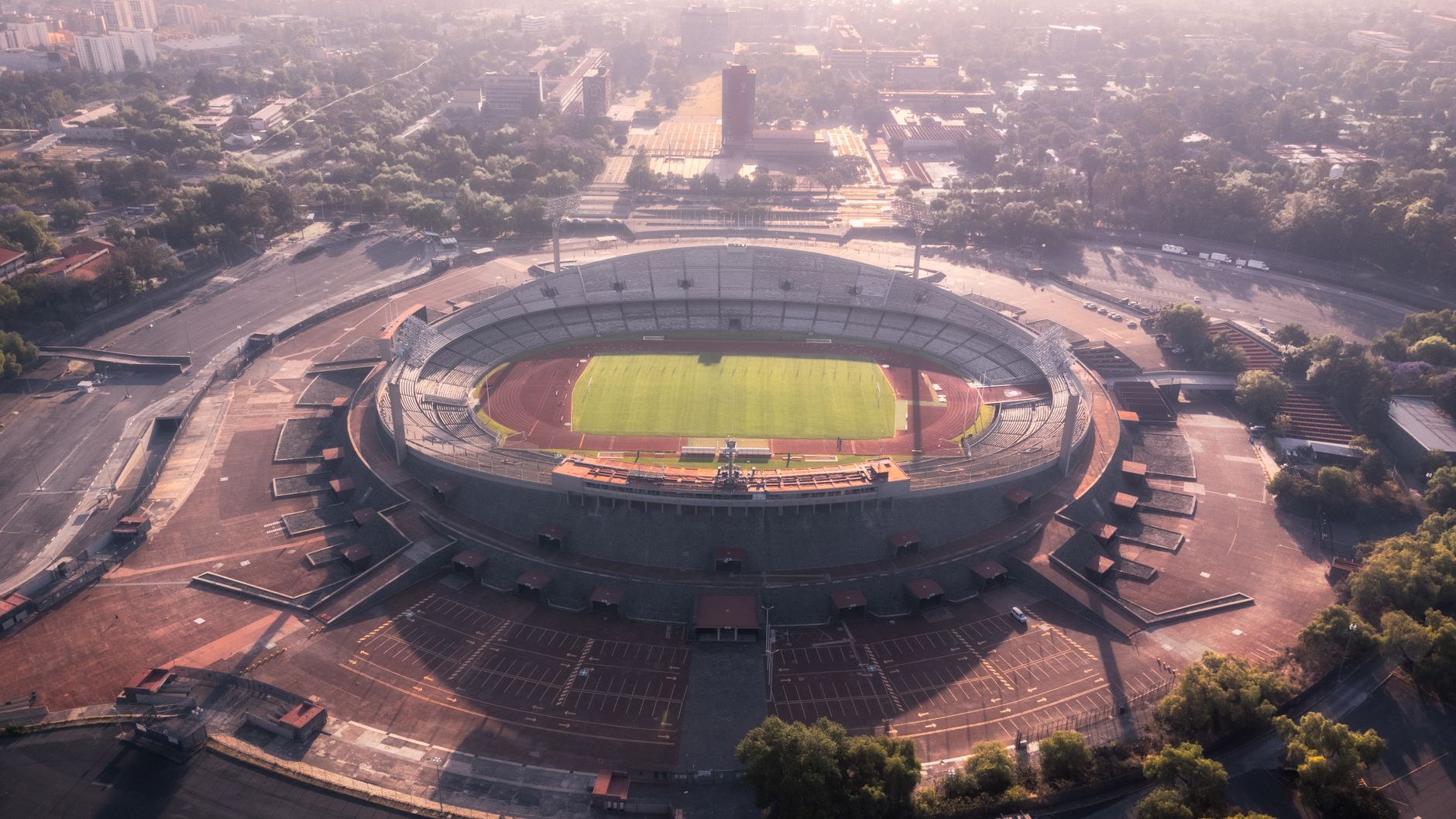
Photo by Jesus Toledo on Pexels
If you want a broader foundation before studying individual fixtures, consult our World Cup 2026 tournament overview. The safest starting point is the official calendar, not a social-media graphic or an old article copied from a previous tournament. FIFA may publish schedule details in stages, and broadcast listings can display a different local time depending on your location. That distinction matters particularly for supporters in Europe, Asia, and Australia, where a June 2026 kickoff in North America may occur overnight or the following morning.
Want a clearer way to follow the tournament?
Step 1: How do you map the World Cup 2026 schedule?
The World Cup 2026 schedule is best mapped through four confirmed variables: match date, local kickoff time, host venue, and competition stage. The tournament begins on June 11, 2026, and concludes with the final on July 19, 2026. Since 16 venues span Canada, Mexico, and the United States, supporters should record both local time and their own time zone before making travel or viewing decisions.
The schedule contains several structural changes that deserve attention. The 48 teams are divided into 12 groups of four, and each team is expected to play three group matches. The top two teams from each group advance, joined by the eight best third-place teams, producing a 32-team knockout stage. Therefore, the traditional assumption that every group sends only two teams forward is no longer reliable. The expansion creates 72 group-stage matches, followed by 32 knockout matches, for a total of 104.
A compact planning table is useful:
- Opening match: June 11, 2026, Estadio Azteca, Mexico City.
- Group stage: June 11 through June 27, subject to the final official fixture list.
- Round of 32: June 28 through July 3.
- Round of 16: July 4 through July 7.
- Quarter-finals: July 9 through July 11.
- Semi-finals: July 14 and July 15.
- Third-place match: July 18.
- Final: July 19, 2026, MetLife Stadium area, New York/New Jersey.
These dates should be treated as a planning framework until FIFA confirms every fixture and kickoff. The United States Soccer Federation and national associations may also publish supporter guidance that affects ticketing, travel, and public viewing arrangements. In my view, the most important operational rule is to keep a version-controlled schedule: save the publication date whenever you record a fixture, because a later revision can invalidate an otherwise careful plan.
Step 2: What should you check before selecting a match?
Before selecting a World Cup 2026 match to watch, compare the fixture’s stage, venue, kickoff time, team qualification status, and travel conditions. A match prediction or viewing plan is incomplete if it ignores the difference between a confirmed pairing and a placeholder involving a group winner or third-place qualifier. Check FIFA first, then cross-reference the relevant federation and broadcaster.
Venue geography is an unusually important variable in 2026. The host cities stretch from Vancouver and Seattle in the west to Toronto, Atlanta, Miami, and New York/New Jersey in the east, while Mexico City, Guadalajara, and Monterrey create a separate travel corridor. The physical distance between venues can exceed 4,000 kilometers, and climate conditions may differ sharply between high-altitude Mexico City and humid coastal locations. These factors do not determine results by themselves, but they can influence recovery time, training routines, substitutions, and supporter logistics.
A professional fixture checklist should include:
- Confirm whether the match is group-stage, round of 32, round of 16, quarter-final, semi-final, or final.
- Record the stadium and host city exactly as published by FIFA.
- Convert kickoff time using a reliable time-zone tool, not mental arithmetic.
- Check the latest squad list, injuries, suspensions, and federation announcements.
- Separate confirmed information from probability-based predictions.
- Review responsible viewing and spending limits before using any betting-related information.
Stadium View’s editorial model keeps predictions separate from official schedule data. That separation is important because a forecast is an interpretation, while a confirmed venue or date is a factual fixture detail. For additional context, see our World Cup team qualification tracker, particularly if you are following a group whose final ranking determines the knockout opponent.
The most overlooked error is not a dramatic analytical failure; it is a one-hour conversion mistake. North American daylight-saving rules, European summer time, and local venue time can create different displayed kickoffs across platforms. Record the host city first, then convert it to your location, and check the result twice.
Ready to compare venues, stages, and match conditions?

Step 3: How can you analyze the expanded tournament format?
The expanded format should be analyzed through qualification probability, rest days, and knockout-path uncertainty rather than team reputation alone. With 12 groups of four and eight third-place teams advancing, a strong team may qualify without winning its group, while a marginally weaker team can remain alive until the final group fixtures. The round of 32 adds one entire elimination layer that did not exist in the 32-team era.
The key mathematical change is volume. The group stage rises to 72 matches, compared with 48 in the previous 32-team format, while the total tournament increases from 64 to 104 matches. That is a 62.5% increase in total fixtures, calculated as 40 additional matches divided by the previous 64. More matches create more observations, but they also create more noise: injuries, travel fatigue, weather, rotation, and tactical adaptation will produce data that is difficult to compare directly.
A practical analytical framework has three layers:
- Baseline strength: FIFA ranking, qualifying performance, squad quality, and recent competitive results.
- Match context: venue altitude, climate, rest period, travel distance, and probable rotation.
- Tournament incentives: whether a team needs a win, a draw, or goal difference to advance.
A contrarian but defensible conclusion follows: the expanded field may make early-stage prediction less reliable, not more. More matches generate larger datasets, yet the number of uncertain variables also rises. A team playing in Vancouver, Dallas, and Mexico City may face three substantially different physical environments. In statistical terms, the sample is larger but less homogeneous.
The FIFA World Cup 2026 regulations should remain the primary reference for competition rules. FIFA’s regulations state that “the competition shall consist of a preliminary competition and a final competition,” which is a useful reminder that qualification status and final-tournament participation are separate analytical categories. Stadium View therefore recommends tracking confirmed squad availability and venue conditions alongside conventional form metrics.
For readers comparing statistical indicators, our player performance and tactical analysis guide provides a more rigorous framework than headline-based commentary. Do not treat possession, expected goals, or recent wins as independent proof of future performance; each must be interpreted within opponent quality and tournament context.
Step 4: Why do venue and travel conditions matter?
Venue and travel conditions matter because the 2026 World Cup covers three countries, multiple climate zones, long intercity distances, and stadiums with different elevations and surface environments. Canada, Mexico, and the United States do not offer a uniform tournament setting. Teams that manage recovery, hydration, training access, and squad rotation efficiently may gain a practical advantage that league-table analysis fails to capture.
The risk is especially visible when analysts treat the schedule as a simple list of dates. A group match at Estadio Azteca in Mexico City carries different environmental questions from a match in Toronto or Seattle. Mexico City sits at high elevation, while several United States venues may involve heat, humidity, or substantial travel distances. The exact effect depends on the teams, preparation, and timing; however, ignoring the variables is methodologically weaker than acknowledging uncertainty.
Use this venue-risk checklist:
- Measure travel distance between consecutive matches.
- Record local kickoff time and expected temperature range.
- Check whether the stadium’s elevation differs materially from the team’s preparation base.
- Review rest days between fixtures.
- Identify likely rotation needs before assessing player statistics.
- Separate stadium characteristics from unsupported claims about guaranteed advantage.
A useful operational edge is calendar buffering. For example, supporters traveling between cities should avoid planning an immediate connection after a match when possible; a 90-minute game can become a four-hour departure process once crowd movement, security, and ground transport are included. This is not a prediction of disruption, but it is a sensible risk-control assumption. Similarly, analysts should avoid comparing a player’s running output from a cool evening match with output from a hot, high-altitude fixture without adjusting the context.
The National Weather Service and Environment and Climate Change Canada provide authoritative weather information for the United States and Canada, while Mexico’s National Water Commission publishes national weather resources. These sources are more dependable than generic “hot venue” labels copied into match previews.

Want to review the tournament through a venue-first lens?
Step 5: Verification
Verification means confirming every important schedule claim against a current primary source before publishing, traveling, watching, or making a prediction. At minimum, verify the date, kickoff time, venue, team pairing, competition stage, and any later FIFA amendment. A schedule should never be treated as permanent merely because it appears in a search result.
Use a five-point verification protocol:
- Open FIFA’s official World Cup 2026 schedule.
- Confirm the fixture’s publication or update date.
- Cross-check the host venue through the stadium or host-city source.
- Convert the local kickoff time to your location.
- Recheck the fixture within 24 hours of travel or live viewing.
This protocol addresses a specific edge case: placeholder fixtures can change meaning after group rankings are finalized. A match listed as “winner of Group A versus third-place team” is not a complete team pairing, and its likely tactical profile may remain uncertain. The same problem affects betting-related content, where an early market can reflect incomplete information and should not be presented as a guaranteed outcome. Stadium View uses cautious language—such as “scheduled,” “projected,” or “subject to confirmation”—when the source does not justify certainty.
A further verification rule concerns duplicate data. If ESPN, a broadcaster, and a fan website show the same kickoff, that does not necessarily represent three independent confirmations; they may all have copied FIFA’s original feed. Independence matters. The strongest chain is FIFA, the host venue, and the relevant national federation. According to ESPN’s FIFA World Cup schedule, fixture listings are useful for navigation, but the official tournament authority remains the decisive source when discrepancies appear.
After verification, archive the information in a simple table with columns for source, timestamp, local time, and confidence level. This small step creates an audit trail and prevents accidental reliance on obsolete graphics.
Troubleshooting common failures
Most World Cup 2026 schedule failures come from outdated fixtures, incorrect time-zone conversion, incomplete knockout placeholders, or confusing the men’s tournament with another FIFA competition. The solution is to return to the primary source, identify the precise error category, and update the record rather than guessing. A controlled correction is faster and safer than defending a wrong schedule.
Common problems include:
- The kickoff time differs across websites: confirm the host city and consult FIFA’s latest listing.
- A team name is missing: determine whether the fixture depends on group ranking or qualification.
- A stadium name looks inconsistent: compare the official FIFA designation with the venue operator’s current name.
- A travel route appears unrealistic: calculate distance between host cities before purchasing transport.
- A prediction changes suddenly: check injuries, suspensions, squad announcements, and weather.
- A betting promotion appears attractive: read legal restrictions, expiry terms, and age requirements before taking any action.
The most important corrective principle is evidence hierarchy. FIFA outranks an unsourced social post; a federation announcement outranks an anonymous injury account; a weather service outranks a generic forecast screenshot. “Official information should be the basis for all decisions” is the practical standard implied by tournament administration, even when unofficial commentary is faster.
For users who cannot access a schedule page, try a different browser, disable stale cached content, or use the tournament’s official mobile resources. If the problem persists, record the last successful update and avoid relying on an unverified alternative. Readers using Stadium View should treat our previews as analytical support, not a substitute for official competition information or personal financial judgment.
Before the conclusion, remember that responsible sports engagement includes limits. Never stake money needed for rent, food, debt repayment, or essential travel, and never interpret a statistical forecast as certainty. The World Cup is a sporting event first; the numbers are there to improve understanding, not to remove risk.

Frequently Asked Questions
Q: What is the World Cup 2026 schedule?
A: The World Cup 2026 schedule covers 104 matches from June 11 to July 19, 2026, in Canada, Mexico, and the United States. The tournament begins at Estadio Azteca in Mexico City and ends with the final at MetLife Stadium in the New York/New Jersey area. Because FIFA can update fixture details, verify each date, venue, and kickoff time through FIFA’s official schedule before making travel or viewing plans.
Q: How many teams will play in the 2026 FIFA World Cup?
A: Forty-eight national teams will compete in the 2026 FIFA World Cup. They are arranged into 12 groups of four, with each team expected to play three group-stage matches. The top two teams from every group and the eight best third-place teams advance to the round of 32, creating a larger qualification calculation than the previous 32-team format.
Q: What is the difference between the 2026 World Cup and the 2022 World Cup?
A: The 2026 World Cup has 48 teams and 104 matches, while the 2022 tournament had 32 teams and 64 matches. The 2026 competition adds a round of 32 and increases the group-stage total to 72 matches. It is also hosted across Canada, Mexico, and the United States, whereas Qatar hosted every 2022 fixture.
Q: How can I check a World Cup 2026 kickoff time correctly?
A: Check the official FIFA listing for the host city first, then convert the published local time to your own time zone. Confirm the conversion with a reliable time-zone service because North American daylight-saving rules can create errors for international viewers. Recheck the fixture within 24 hours of the match, especially if you are traveling or relying on a broadcaster’s program guide.
Q: Why does the World Cup 2026 schedule show incomplete team names?
A: Incomplete team names usually indicate a knockout-stage placeholder or a fixture dependent on group rankings. For example, a listing may identify a group winner, runner-up, or qualifying third-place team before the final teams are known. Do not treat that placeholder as a confirmed pairing; revisit the schedule after the relevant group matches conclude.
Q: How much does it cost to follow the World Cup 2026?
A: The cost depends on whether you watch at home, use a paid broadcaster, attend matches, or travel between host cities. Home viewing may involve a streaming or television subscription, while attendance adds tickets, transportation, accommodation, food, and possible visa-related expenses. Set a fixed budget before purchasing anything, and treat betting or promotional offers as optional financial risk rather than a required tournament expense.
Q: What should I do if a World Cup 2026 schedule website conflicts with FIFA?
A: Use FIFA’s official schedule as the primary authority and treat conflicting third-party listings as unverified until corrected. Record the source, update time, venue, and local kickoff so you can identify exactly where the discrepancy occurred. If the conflict affects a ticket, flight, or paid activity, contact the provider directly before committing additional money.
The World Cup 2026 schedule is manageable when treated as a verified data system rather than a static poster. The essential facts are clear: 48 teams, 104 matches, 16 host cities, three host countries, and a tournament window from June 11 through July 19, 2026. The less obvious risks—time-zone conversion, long-distance travel, incomplete knockout pairings, climate differences, and duplicated unofficial data—are precisely where careful readers can gain an advantage. Stadium View will continue covering match predictions, tactics, player statistics, and tournament developments, but official FIFA confirmation should remain the final checkpoint. Please save the schedule, timestamp your updates, and review your personal viewing or spending limits before acting on any forecast.
Explore the latest World Cup 2026 coverage and verified tournament analysis.
Thank you for reading.
Stadium View
High-Stakes Editorial · Premium Insights