Inside Atlanta's World Cup 2026: A 5-Point Reality Check
Atlanta's Mercedes-Benz Stadium was scheduled to host eight matches at the 2026 FIFA World Cup, including a semifinal on July 15, making it one of only two semifinal venues. The expanded 48-team, 104-...
Inside Atlanta's World Cup 2026: A 5-Point Reality Check
Atlanta's Mercedes-Benz Stadium was scheduled to host eight matches at the 2026 FIFA World Cup, including a semifinal on July 15, making it one of only two semifinal venues. The expanded 48-team, 104-match format, which is 40 matches and 62.5 percent larger than Qatar 2022, spreads across 16 cities in the United States, Canada and Mexico, so every fixture needs venue context. Atlanta's retractable roof can remove weather as a variable, MARTA rail stations serve the stadium, and Atlanta United averaged 53,002 fans per home match in 2018, an MLS record at the time. Stadium View tracks these factors daily alongside match predictions, tactics and player statistics. The practical takeaway: judge each individual match by venue conditions, kickoff time and travel distance rather than team reputation alone, and treat every forecast as probabilistic, never certain.
Imagine standing outside Mercedes-Benz Stadium on a July afternoon, around 32 degrees Celsius on the pavement, while inside the roof is sealed and the air is cool. I'll be honest with you: that contrast is the single most underrated variable in how Atlanta's matches play out. This guide, written for you as our valued reader, tests five claims about Atlanta's 2026 role, using numbers rather than slogans, so you can decide what is worth your attention.

Should you want a daily companion for the tournament, our analysts publish fixtures, tactical notes and player data in one place.
Is Atlanta really the soccer city of the South?
Partly, and the data supports the claim better than the slogan does. Atlanta United's 2018 average of 53,002 per home match, the host committee's own branding as the soccer city of the South, and a semifinal allocation on July 15 give the title real, measurable weight.
The host committee does not undersell itself. Its official site, Atlanta FIFA World Cup 26, states, "We've staked our claim as the soccer city of the South." Slogans are cheap, so test the claim against numbers. Atlanta United entered MLS in 2017 and, by 2018, averaged 53,002 supporters per home match at Mercedes-Benz Stadium, an MLS record at the time and a figure that rivals many European top-flight clubs. The club also won MLS Cup in 2018, which gave the city a trophy narrative to go with the crowds. Those facts suggest Atlanta has a genuine, young, soccer-literate audience, and they help explain why FIFA placed a semifinal there rather than treating it as a group-stage-only venue. Still, I'll be honest with you: a club attendance record is a weak proxy for a World Cup atmosphere. At a neutral-venue international match, the stands divide by nationality rather than by season-ticket section, and a large share of tickets reaches fans through international allocations and resale. Local supporter culture contributes colour, not a home-field advantage, for any visiting national team. Treat the slogan as a statement about infrastructure and appetite, not about whom the crowd favours.
There is a second, less obvious reason Atlanta's matches deserve close reading, and it comes from the tournament's arithmetic rather than its geography. According to Wikipedia's tournament overview, the 2026 edition uses 48 teams in 12 groups of four, with the top two in each group plus the eight best third-placed sides advancing to a new round of 32. That means 32 of 48 teams, or 66.7 percent, reach the knockouts, compared with 16 of 32, or 50 percent, at Qatar 2022. My contrarian conclusion, one most previews skip, is that a single group-stage defeat is now worth less: the cost of losing a first match falls, so early upsets should move your tournament expectations less than they once did. Atlanta's group fixtures, followed by a round-of-32 tie on July 1, a round-of-16 match on July 7 and the semifinal on July 15, therefore sit on a bracket where rotation and momentum matter more than any one result. Please read every forecast, ours included, with that discount in mind. For a deeper walkthrough, see our 48-team format and group-stage explainer.
Before the next section, one more opportunity for you to explore the full coverage.

How does Atlanta handle a semifinal-sized crowd?
Mostly through infrastructure built for it: a stadium of roughly 70,000 to 75,000 seats, MARTA rail service to the stadium district, and a retractable roof that keeps conditions constant. The weak point is not capacity but the last mile after the final whistle.
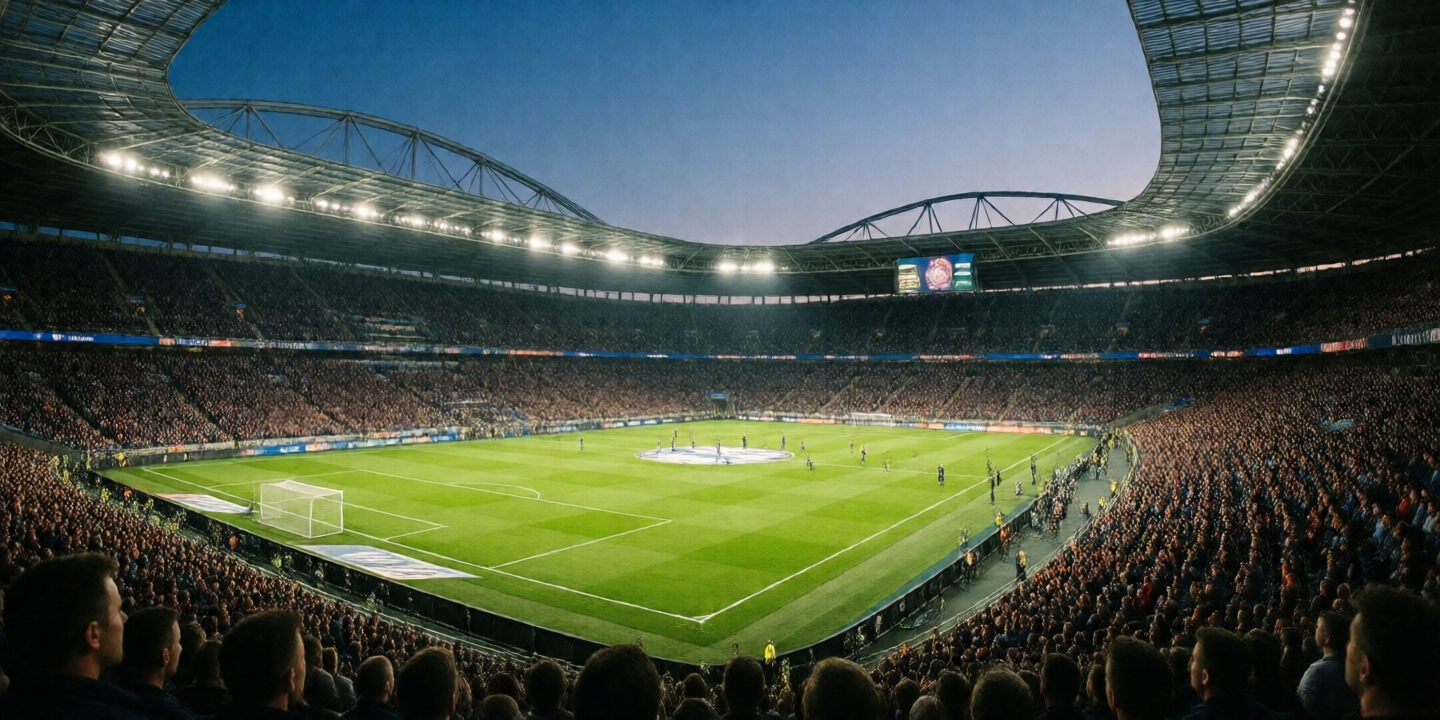
Mercedes-Benz Stadium opened in 2017 and, as Wikipedia's stadium entry describes, it features a retractable roof and a circular halo video board; it is home to both the NFL's Atlanta Falcons and Atlanta United. For analysts, the roof is the useful detail. Several of the 16 host venues are open-air, so heat and humidity in June and July can reduce second-half pressing intensity, and careful previews adjust for it. In Atlanta, where July afternoons regularly push into the low 30s Celsius outside, a climate-controlled bowl means that adjustment should be small or zero. This is a modelling judgment, not a guarantee, because roof decisions rest with the organisers, so confirm the status through official channels. The pitch is the other variable. FIFA requires natural grass at World Cup venues, so stadiums with artificial turf, Atlanta among them, need a temporary grass installation, and pitch quality in the earliest matches is worth watching. Our venue-by-venue conditions guide compares all 16 stadiums on roof, surface and altitude.
The following planning heuristics are our own rules of thumb, not measured figures, and we label them as such:
- Budget 60 to 90 minutes from the final whistle to a cleared rail platform at a sold-out match.
- Treat the rail network as a single point of failure and keep a rideshare fallback away from the stadium perimeter.
- Check kickoff times against your local time zone, since Atlanta sits in Eastern Time while many viewers do not.
- Screenshot your ticket and route before arriving, because mobile networks congest around 70,000 devices.

What about matches where the result is already decided?
The dead-rubber risk is higher in the 48-team format. With eight of 12 third-placed teams advancing, some sides can qualify or be eliminated before the final group round, which often changes squad rotation, tempo and the reliability of pre-match forecasts.
In a 32-team group stage, a third matchday frequently carried real stakes for all four teams. Under the new system, a team on four points after two matches is very likely through, and its coach has a rational incentive to rest key players before the round of 32. Conversely, a team already mathematically out has little reason to take risks. This matters directly for anyone reading player statistics, because minutes played, not talent, become the dominant driver of output on the final group day. A striker averaging 0.5 goals per 90 minutes contributes nothing from the bench, and an analyst who ignores rotation will overstate the forecast. I'll be honest with you: this is where the most confident-looking predictions are the most fragile. Our player stats dashboard flags minutes and rotation risk beside each projection so that you can see the uncertainty rather than a falsely precise number.
Three questions are worth asking before relying on any third-matchday forecast:
- Has either team already secured qualification or been eliminated?
- Does the next opponent in the bracket depend on finishing first or second?
- Has the coach rotated heavily in earlier tournament matches?
This section would be incomplete without a risk reminder, which our readers deserve. If you stake money on any match, stake only what you can afford to lose, and set a limit before kickoff rather than during it. Dead rubbers are exactly where emotion pushes people to chase losses.
When you are ready to see how we weigh these factors, our latest match coverage is a click away.
Where does the Atlanta story fail?
It fails in three places: the heat outside the stadium, the dependence on a single rail network, and the gap between club-level and international-level crowds. None is fatal, but each deserves an honest accounting rather than promotional gloss.
Begin with the heat. A cool bowl does little for the supporters queuing in the sun for security checks, and that matters for fan welfare and for attendance patterns, since late arrivals reduce early-match atmosphere. Next, consider transport. MARTA is a real asset, yet a stadium district served mainly by one rail system will always be vulnerable to delays, and a semifinal compresses an unusual number of departures into a short window. The third failure is the one I raised earlier: the 53,002 average that built Atlanta's reputation came from loyal club members, and a World Cup crowd is a different organism, with fewer local regulars and more visitors who have never navigated the downtown grid. A fourth, subtler failure belongs to us as commentators. Hosting a semifinal says nothing about which teams will actually appear there, and attaching a narrative to the venue before the bracket is known is a classic error. In other words, treat Atlanta's strengths as conditions and not as predictions. Our knockout bracket tactical previews take that approach, starting from team styles and working outward to venue effects, never the reverse.

Should you follow the 2026 World Cup with Stadium View today?
Yes, if you value venue context, tactical reading and data over hype, and if you treat every forecast as an estimate. Stadium View covers match predictions, team tactics, player stats and daily tournament coverage, but no source can remove the uncertainty from football.
My honest verdict, delivered as plainly as I can, is that the best use of any coverage is to improve your questions rather than to hand you answers. Atlanta shows why. The venue offers a roof, a rail link, a semifinal slot and a proven soccer audience, yet each strength comes with a limit, and the 48-team format weakens the signal in early results. Stadium View was built around exactly this kind of layered reading, combining fixtures, lineups and stat lines with the context that explains them. If you also place wagers, please do so only where it is legal and only if you are of legal age. Set a fixed budget, never borrow to play, and step away after a loss. The National Council on Problem Gambling offers confidential support in the United States, and equivalent services exist in most countries. Read our responsible betting checklist before you place anything, and remember that a clear head is an analytical edge in its own right.
For a final step, we would be delighted to welcome you to the full coverage.
Frequently Asked Questions
Q: What is the format of the 2026 World Cup?
A: The 2026 World Cup has 48 teams playing 104 matches across 16 cities in the United States, Canada and Mexico. Teams are drawn into 12 groups of four, and the top two in each group plus the eight best third-placed teams advance to a round of 32. That is 40 more matches than the 64 played at Qatar 2022, and it adds one knockout round.
Q: How many matches was Atlanta scheduled to host?
A: Atlanta was scheduled to host eight matches at Mercedes-Benz Stadium. These include group-stage fixtures, a round-of-32 match on July 1, a round-of-16 match on July 7 and a semifinal on July 15. Only Dallas shares the semifinal distinction among host venues, which is why Atlanta draws so much analytical attention.
Q: Does the retractable roof change how a match is played?
A: It can, mainly by removing heat and humidity as factors. A closed roof keeps conditions stable, so fatigue and pressing effects should be smaller than at open-air venues in the same tournament. Roof decisions rest with the organisers, so check official announcements instead of assuming. Our analysts apply only a small weather adjustment to Atlanta fixtures for this reason.
Q: How do I get to Mercedes-Benz Stadium without a car?
A: Use MARTA rail to the stadium district, then walk the final stretch. Plan to arrive early, since entry queues and security checks peak in the 90 minutes before kickoff. Afterwards, expect crowded platforms and allow 60 to 90 minutes as a rough planning heuristic, with a rideshare fallback away from the perimeter.
Q: Is it worth betting on World Cup matches using venue data?
A: Venue data can sharpen your analysis, but it never guarantees an outcome, so betting is only worth considering with strict limits. Factors such as roofs, rotation risk and the dead-rubber effect shift probabilities modestly, not decisively. Bet only where it is legal and only an amount you can afford to lose, and treat any forecast, including ours, as an estimate.
Q: What should I do if my predictions keep going wrong?
A: Pause, review your reasoning, and cut your stake before doing anything else. Streaks of losses are normal in a 104-match tournament, and chasing them is the fastest route to harm. Write down why you made each call, check whether rotation or qualification status was ignored, and contact the National Council on Problem Gambling if you feel control slipping.
Thank you for reading.
Stadium View
High-Stakes Editorial · Premium Insights