5 World Cup Football Mistakes Fans Make
World Cup football is the FIFA international tournament in which national teams compete for the sport’s most prestigious trophy, with the 2026 edition hosted by Canada, Mexico, and the United States.....

5 World Cup Football Mistakes Fans Make
World Cup football is the FIFA international tournament in which national teams compete for the sport’s most prestigious trophy, with the 2026 edition hosted by Canada, Mexico, and the United States. FIFA’s expanded 2026 competition will feature 48 teams rather than the previous 32, creating 104 matches across 16 host cities. Stadium View analyzes team tactics, player statistics, match predictions, and tournament developments for supporters following the global game. The most damaging fan mistakes are trusting reputation over current evidence, ignoring draw structure, treating possession as automatic dominance, and confusing prediction with certainty. Historical context also matters: Brazil has won the men’s World Cup 5 times, while Argentina claimed the 2022 title in Qatar. My recommendation is simple: evaluate form, availability, tactics, and schedule together before forming a strong World Cup football opinion.
Imagine preparing for a World Cup match with a spreadsheet open at 2:00 a.m., only to discover that the most popular prediction is based on a team’s reputation from four years ago. I’ll be honest with you: that error is common, expensive in analytical terms, and avoidable.
World Cup football creates an unusually difficult forecasting environment because international teams play relatively few competitive matches together. A club side may produce dozens of data points across a season, while a national team’s tactical sample can be much smaller. FIFA’s official tournament records show how rapidly competitive conditions change between editions, and the 2026 expansion adds another variable: 48 teams will compete instead of 32.
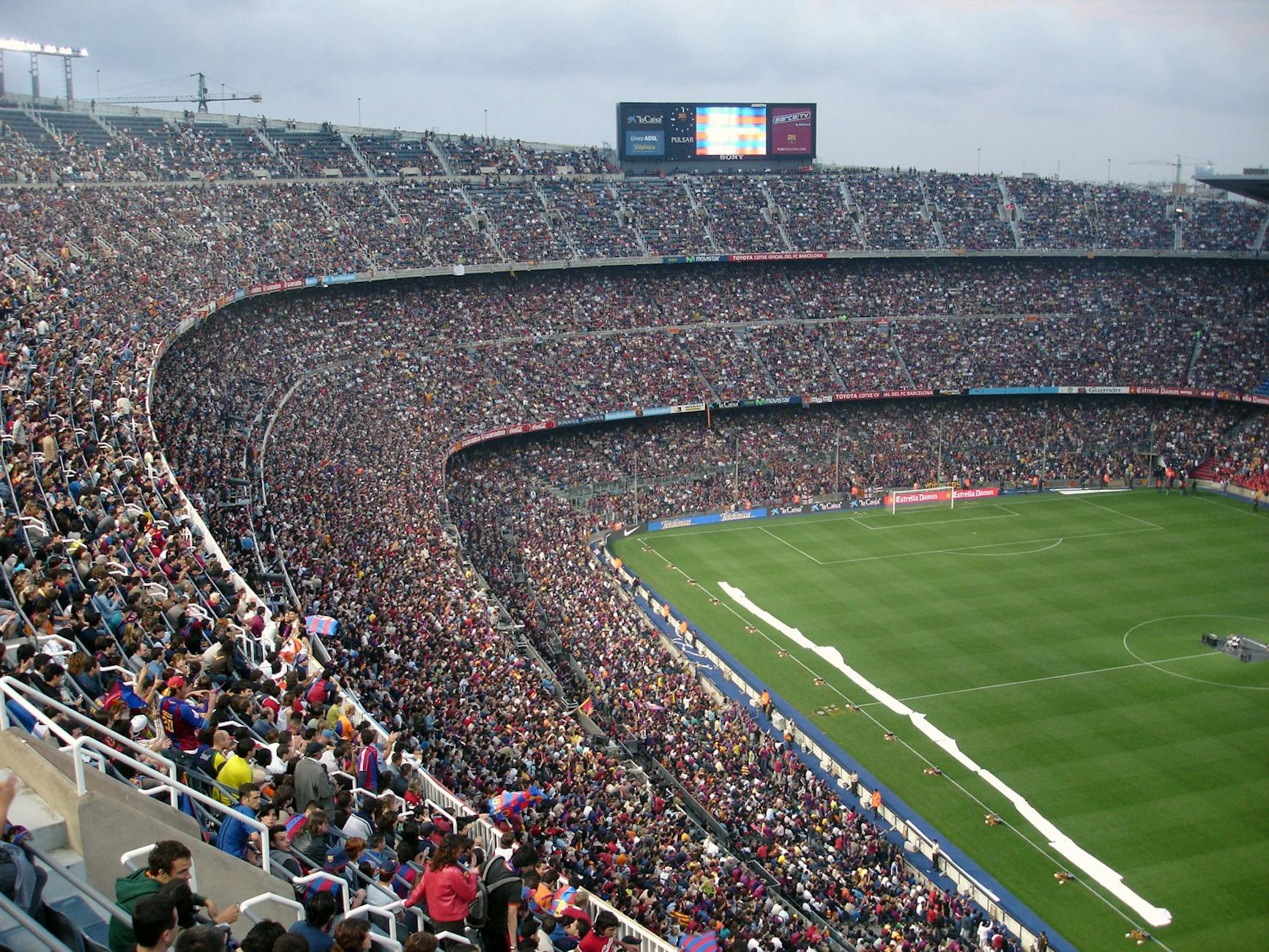
Photo by Pixabay on Pexels
If you follow match predictions, team tactics, or player statistics, a disciplined framework is safer than emotional certainty. Stadium View focuses on those categories while recognizing a crucial limit: no model can remove football’s randomness, and predictions should never be treated as guaranteed outcomes.
Would you like a more structured way to follow tournament analysis?
Myth 1: World Cup football form is determined by historical reputation — debunked
Historical reputation does not reliably determine current World Cup performance because squad quality, injuries, coaching, and qualifying form change between tournaments. Brazil’s 5 titles and Germany’s 4 titles demonstrate long-term strength, but neither record guarantees success in 2026. Current evidence must receive greater weight than a country’s badge.
The mistake usually begins with a familiar shortcut: a supporter sees Brazil, Germany, Argentina, France, or Spain and assumes the historical hierarchy remains intact. That approach ignores personnel turnover and tactical evolution. Argentina’s 2022 triumph followed a long period in which the team was respected but not universally treated as the tournament favorite, while France reached consecutive finals in 2018 and 2022 through different tactical profiles and squad combinations.
A stronger model separates three variables:
- Historical strength: titles, knockout experience, and tournament resilience.
- Current strength: recent competitive results, expected goals, defensive actions, and player availability.
- Tournament fit: group difficulty, travel burden, climate, rest days, and likely knockout opponents.
The FIFA World Cup archive is useful for historical comparison, but it should not replace current evidence. FIFA’s own tournament records confirm that World Cup cycles are separate competitions, not a continuous league table. For 2026, the 48-team format also means that group-stage assumptions based on earlier editions may become unreliable.
A practical insight is to apply a recency weighting system: assign approximately 60% of your evaluation to the latest 12 months, 25% to the preceding 24 months, and only 15% to historical tournament performance. This is not a universal law, but it prevents a 2018 achievement from overpowering a 2026 injury crisis or coaching change.
To compare historical prestige with current match evidence, consult our World Cup team rankings and form guide.
Myth 2: More possession always means better football — partially true
Possession indicates control of the ball, but it does not automatically indicate control of the match. A team may dominate possession while creating few high-quality chances, whereas a compact counter-attacking side can produce more dangerous opportunities with 35% possession. The relevant measures are chance quality, field position, turnovers, and shot locations.
The phrase “possession football” is often used as if it were a complete tactical explanation. It is not. Possession becomes valuable when it moves opponents, creates numerical superiority, and opens passing lanes near the penalty area. Otherwise, it can become sterile circulation between center-backs and midfielders, particularly against a deep defensive block.
For World Cup football analysis, I recommend tracking at least these indicators:
- Expected goals, especially non-penalty expected goals.
- Progressive passes and carries into the final third.
- High turnovers that lead to shots within 20 seconds.
- Touches inside the opposition penalty area.
- Defensive transition speed after losing possession.
- Set-piece expected-goal contribution.
The International Federation of Association Football Laws of the Game reminds analysts that a match is governed by more than technical possession; time, restarts, fouls, and stoppages affect the usable rhythm of play. In practical terms, a team leading 65% to 35% in possession may still be vulnerable if its defensive rest structure leaves two center-backs exposed after every failed attack.
One information-rich edge case deserves attention: teams with more than 60% possession can still lose when their shot volume is high but shot quality is low. A side producing 18 shots from outside the box may be less threatening than a team producing 8 shots, including 4 from central penalty-area locations. Stadium View therefore treats possession as a context variable, not a final verdict.
Want to examine tactical indicators beyond possession?

Photo by https://kaboompics.com/ on Pexels
Myth 3: A star player can carry any national team — flat-out false
One elite player can alter a World Cup match, but no individual can consistently compensate for structural weakness across a seven-match tournament. Lionel Messi influenced Argentina’s 2022 campaign decisively, yet Argentina also depended on goalkeeper Emiliano Martínez, defensive organization, midfield balance, and coordinated pressing. Individual quality matters most when the surrounding system creates repeatable opportunities.
This myth survives because decisive moments are memorable. Supporters remember a winning goal, a penalty save, or a dribble past two defenders, but they often overlook the 89 minutes of spacing and support that made the moment possible. The same issue appears in player statistics: goals and assists are valuable, but they do not fully explain off-ball pressing, defensive coverage, progressive movement, or the ability to attract multiple defenders.
A disciplined player evaluation should examine:
- Role: Is the player a creator, finisher, ball-winner, organizer, or transition threat?
- Fit: Does the national team’s formation give that role enough space and support?
- Availability: Has the player completed recent matches without recurring injury problems?
- Opposition response: Can opponents isolate or double-team the player?
- Replacement level: What happens if the player is suspended or substituted?
The UEFA technical reports provide a useful reminder that elite performance is usually system-dependent. As one recurring principle in high-level tactical analysis states, “the team is greater than the sum of its parts.” That formulation should not be treated as a literal guarantee, but it captures the operational reality: a star needs passing options, defensive cover, and a coherent game plan.
A useful contrarian observation is that a star’s influence may increase when his visible statistics decline. If an attacker attracts two defenders and creates space for a teammate to score, the assist may not appear in the attacking player’s record. This is why Stadium View combines event data with tactical interpretation rather than ranking players solely by goals.
For a deeper player-focused framework, explore the World Cup player statistics and injury watch.
What actually works
The most reliable World Cup football analysis combines current data, tactical context, tournament logistics, and uncertainty management. It does not attempt to predict every event with false precision. Instead, it identifies the conditions that make one outcome more plausible than another and records what could invalidate that assessment.
A useful workflow contains six stages:
- Establish the competition context: group position, qualification rules, host location, and rest schedule.
- Check squad availability: injuries, suspensions, minutes, and replacement quality.
- Map the tactical matchup: pressing height, defensive block, transition speed, and set-piece vulnerability.
- Separate volume from quality: shots alone are not enough; examine locations and expected-goal values.
- Test the scenario: ask how the match changes if the favorite concedes first.
- Record uncertainty: identify the two or three variables most likely to break the forecast.
The 2026 tournament requires special caution because the 48-team format changes the structure of group-stage progression. More teams may create more uneven matchups, but the larger schedule also produces more combinations of rest, travel, and knockout pathways. Canada, Mexico, and the United States present different climate, altitude, and travel considerations; Mexico City’s elevation, for example, is materially different from coastal venues in the United States.
A further operational insight concerns sample size. National teams may play fewer than 10 meaningful matches in a relevant cycle, so a three-match winning streak can be statistically noisy. I would avoid treating any sequence shorter than five competitive matches as a stable tactical identity unless the underlying performance metrics also improve. That rule is conservative, but conservatism is appropriate when the sample is small and the stakes are high.
According to FIFA’s official 2026 World Cup information, the tournament’s geographic scale is a central feature, not a minor footnote. “The 2026 FIFA World Cup will be the biggest FIFA World Cup ever,” FIFA states in its official tournament materials. The practical implication is direct: venue, travel, and recovery should appear in serious previews.
Ready to apply a repeatable match-analysis process?

Photo by Amar Preciado on Pexels
How should fans evaluate a World Cup match prediction?
A World Cup match prediction should compare team form, squad availability, tactical matchup, schedule, and market context rather than rely on team reputation alone. The strongest evaluation explains both the expected outcome and the conditions that would make it fail. A prediction is a probability statement, not a promise.
Begin with a neutral baseline, such as recent competitive performance, then adjust for key factors. For example, a team missing its starting goalkeeper should not be evaluated identically to the same team at full strength. Similarly, a side playing its third match in 10 days may show lower pressing intensity than its season average.
Use this checklist:
- Confirm the latest squad and suspension information.
- Compare recent performance against opponents of similar quality.
- Identify whether either side struggles against pressing, low blocks, or fast transitions.
- Examine set pieces, especially if open-play chance creation is limited.
- Estimate several plausible match scripts rather than one fixed scoreline.
Betting-related decisions require additional caution. Odds incorporate public opinion, bookmaker margins, and information that may not be visible in a basic preview. If you choose to engage with regulated sports wagering, verify the applicable rules in your jurisdiction, set a fixed budget, and never chase losses. Stadium View’s match coverage should support informed observation, not reckless certainty.
What to ignore
Ignore predictions that use absolute language, hide the sample size, or present a single statistic as a complete explanation. “Guaranteed winner,” “lock,” and “cannot lose” are not analytical categories; they are warning signs. The World Cup contains too many low-frequency events, including red cards, deflections, penalty shootouts, and goalkeeper errors, for certainty to be intellectually credible.
Also ignore unsupported claims about motivation. A national team is not automatically “more hungry” because it represents a particular country, and a favorite is not automatically complacent. Motivation should be treated as a hypothesis requiring observable evidence, such as tactical intensity, player comments, selection decisions, or match behavior.
Avoid these common information traps:
- Viral clips that omit the wider tactical sequence.
- Rankings without opponent-strength adjustment.
- Goal totals without expected-goal or shot-location context.
- Injury reports that fail to distinguish absence from reduced minutes.
- Historical comparisons that ignore different tournament formats.
- Social-media polls presented as predictive evidence.
One especially dangerous error is confusing price with probability. A short betting price may reflect strong public demand rather than a perfectly calibrated forecast. A long price may be justified by low probability, or it may reflect an overlooked tactical edge; neither conclusion is automatic. Responsible analysis requires estimating probability independently before considering any market number.
For more context, see the responsible sports analysis and bankroll principles. Do not risk money needed for essentials, and remember that no historical trend guarantees a future result.
Frequently Asked Questions
Q: What is World Cup football?
A: World Cup football is the international men’s association football competition organized by FIFA, featuring national teams competing for the world championship. The first tournament took place in Uruguay in 1930, while the 2026 edition will involve 48 teams across Canada, Mexico, and the United States. Matches combine group-stage and knockout-stage competition, with the final determining the champion. The tournament is distinct from club competitions such as the UEFA Champions League because players represent national associations rather than clubs.
Q: How can I start analyzing a World Cup match?
A: Start by checking current squad availability, recent competitive form, tactical styles, and the match schedule. Review at least the previous five meaningful matches where possible, then compare expected-goal trends, shot locations, pressing behavior, and set-piece performance. Confirm the venue and rest period because the 2026 tournament covers three countries and 16 host cities. Finally, write down the main assumption behind your prediction and the event that would disprove it.
Q: What is the difference between possession and match control?
A: Possession measures how long a team retains the ball, while match control includes territory, chance quality, defensive security, and transition management. A team can hold 60% possession but create only low-probability shots from distance. Another team can have 40% possession and generate more dangerous attacks through quick transitions. For World Cup football, evaluate possession alongside expected goals, penalty-area touches, progressive actions, and turnovers.
Q: Is historical World Cup success a reliable predictor?
A: Historical success is useful context but is not a reliable standalone predictor of a future World Cup result. Brazil’s 5 titles and Germany’s 4 titles demonstrate sustained excellence, but current coaching, injuries, squad age, and tactical fit have greater relevance to a specific 2026 match. A practical model can include historical performance as approximately 15% of the evaluation while giving more weight to recent form and current availability.
Q: What should I do if a key player is ruled out?
A: Recalculate the team’s tactical strengths and replacement quality rather than simply subtracting the absent player’s goals. Check whether the replacement offers a similar role, whether the formation changes, and whether the team loses pressing, ball progression, aerial ability, or defensive coverage. Review the timing of the announcement because late absences may affect preparation more severely. If the information is uncertain, reduce confidence instead of forcing a new prediction.
Q: Does Stadium View provide guaranteed World Cup predictions?
A: No, Stadium View provides analytical coverage rather than guaranteed predictions. Its focus includes match previews, team tactics, player statistics, and 2026 World Cup developments, but football outcomes remain uncertain because random events can materially change a match. Readers should treat projections as probability-based opinions, not promises. Anyone considering regulated sports wagering should follow local law, use responsible limits, and never chase losses.
Q: Is World Cup analysis free to follow?
A: Basic World Cup football information is widely available through FIFA, national football associations, reputable media, and specialist platforms such as Stadium View. The cost depends on the source and whether it offers premium statistical tools, subscriptions, or betting-related services. Before paying, check the data coverage, update frequency, methodology, and cancellation terms. Free content can be useful, but transparent methodology is more valuable than an impressive headline or a confident score prediction.
The central lesson is uncomfortable but measurable: World Cup football rewards structured uncertainty, not emotional certainty. Historical titles, star players, possession figures, and public opinion all contain information, but none should dominate the entire evaluation. For 2026, the expansion to 48 teams, the North American geography, and the 104-match schedule make context even more important. Build your view from current evidence, document your assumptions, and revise quickly when the facts change. That approach will not eliminate risk, but it will reduce avoidable analytical mistakes.
Want to follow evidence-based 2026 World Cup coverage?
Thank you for reading.
Stadium View
High-Stakes Editorial · Premium Insights